Welcome back to Ward’s Wire! Thanks for spending a little of your week with me. You have a lot of choices about how and where to spend your time. I’m grateful that you have chosen to spend some of that time with these stories.
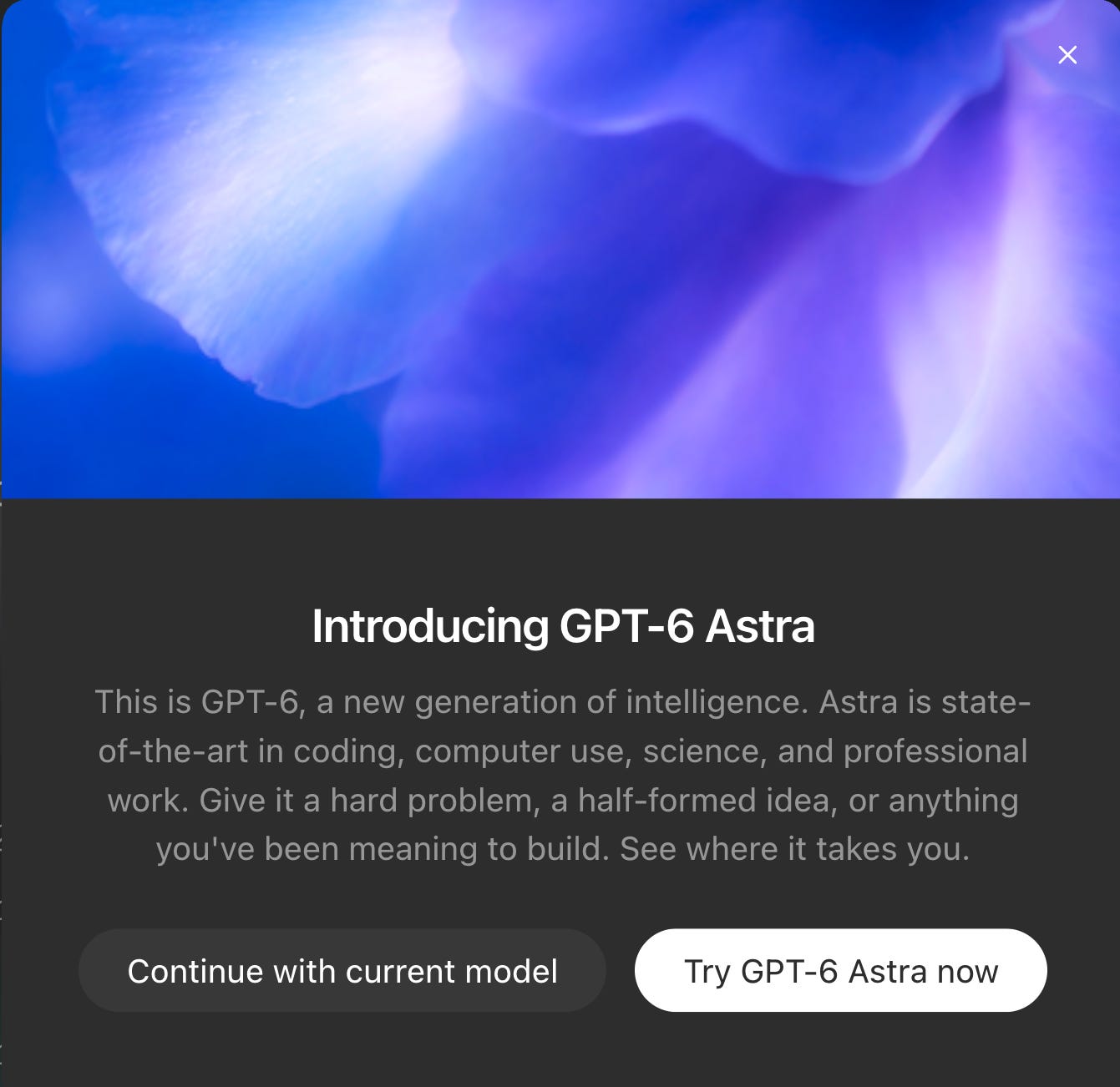
This week, I’m bringing you a variety of stories about the one topic that’s been dominated the AI conversation, i.e. the release of OpenAI’s GPT-6 Astra.
We’ll hear from people around the Twitterverse1 who have been pushing the model’s capabilities. Some have achieved truly amazing things. Others have managed to find areas where it starts to struggle. The short version: it isn’t perfect, but it may be the most capable model we’ve seen so far.
You may also notice that I’ve made a few changes to the newsletter’s format. A reader suggested I spend a little more time introducing each week’s topic and letting more of my personality come through. Given that my name is on the newsletter, I think it might be a valid point.
Writing Ward’s Wire involves a lot of trial and error. I spend a lot of time deciding which news items deserve your attention, how best to explain them, and how much commentary each piece deserves (if any). This week, I’m going to offer more of myself and my thoughts than I have in the past. I hope you enjoy it but if you’d rather return to a listing of interesting tweets and news items, please speak up and let me know.
Your feedback is always welcome. If there’s something you’d like me to cover or something that isn’t working for you, please leave a comment or reach out. I’d love to hear your thoughts.
I’m also going to take this opportunity to experiment with formatting because, at times, I have had users express confusion regarding which parts are me speaking and when I am quoting someone else. To that end, my words will appear as plan, unadorned text. I may use ITALICS or BOLD to emphasize some point, but other than that if there is no special formatting (exactly how all of the paragraphs so far have been), it’s me speaking. To be absolutely certain that you know when it’s me speaking, If I’m concerned that authorship may be confusing, I’ll even preface the text with John here followed by whatever I have to say.
Quotations will appear using Substack’s quotation formatting which inserts a vertical line before the text. It looks like this:
QUOTED TEXT
At times I will use the gray boxes which were formally reserved for quoted text to highlight information. They will look like this:
THIS IS INFORMATION I WANT TO MAKE SURE YOU NOTICE.
Thanks for your patience while I work to figure out the best format and presentation for these topics.
Litterbox
One of the main reasons I started this newsletter was to help those individuals who wanted to stay on top of news from the AI community, but who no longer wished to use Twitter. Since the AI community is almost exclusively on Twitter, that represents a real problem.
This desire to avoid Twitter reprsents a problem for the videos I share here that many times are embedded in tweets. Litterbox may represent an answer for those of you who are within Apple’s ecosystem. I’ll let the developer explain what it does:
“…I made Litterbox, a Safari extension that opens x.com links in a popup. The idea is you open it, take a look, gag a little, then close the lid…
…Litterbox doesn’t send your cookies when you open those popups, because of course. It uses the same API X uses for its website embeds. I don’t think they’ll kill the website embed feature. But if they do, it will be very funny…”
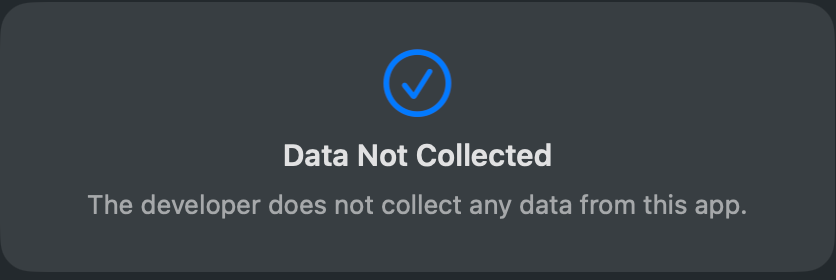
The extension, called Litterbox-Post Peeker, is available for free on the Mac App Store. The developer has told Apple the he does not collect any data from the app.
GPT-6 Astra Reception
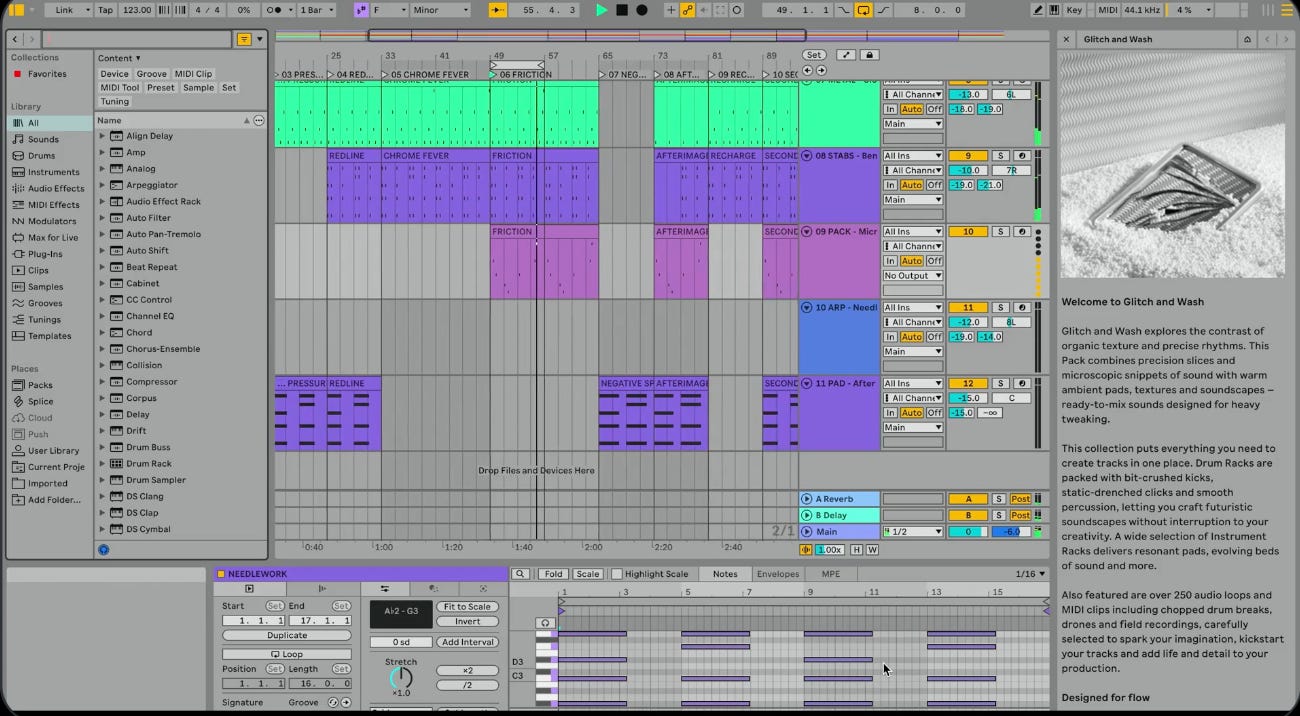
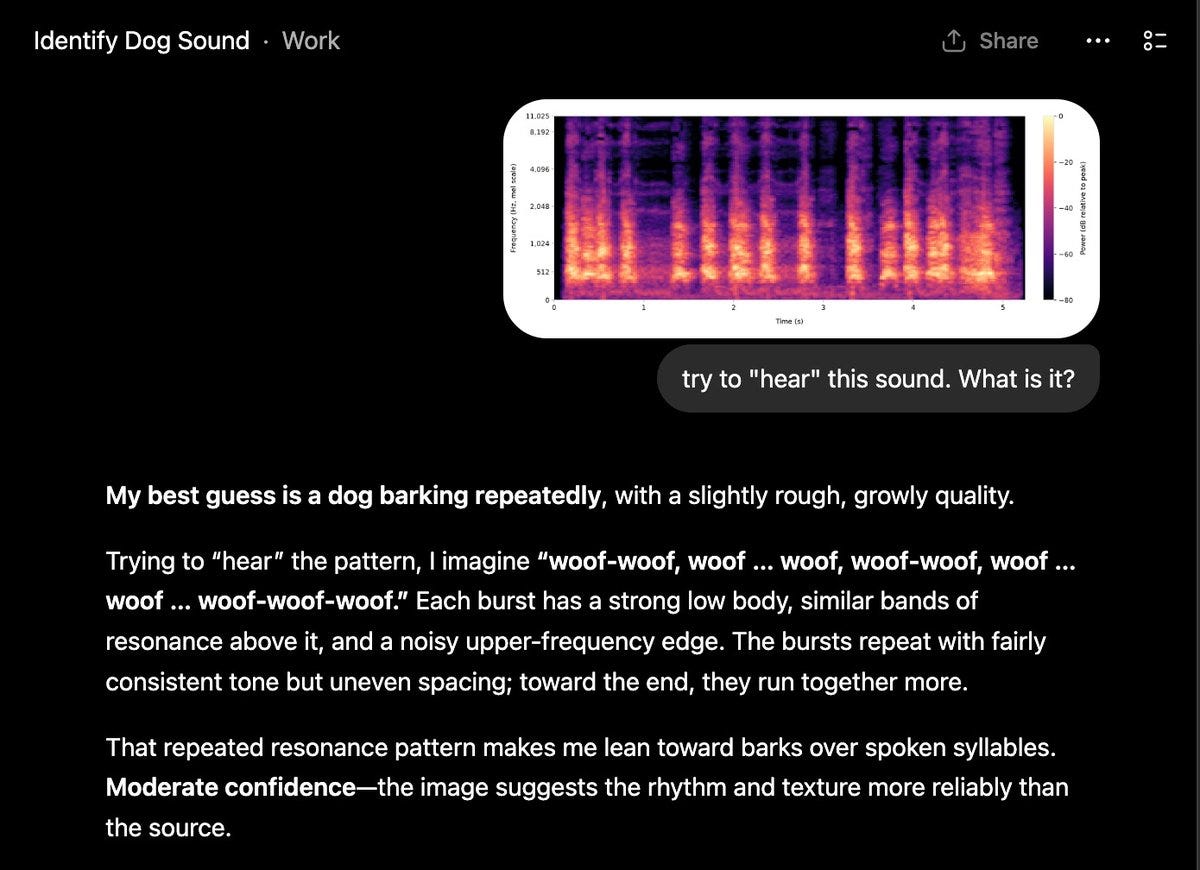
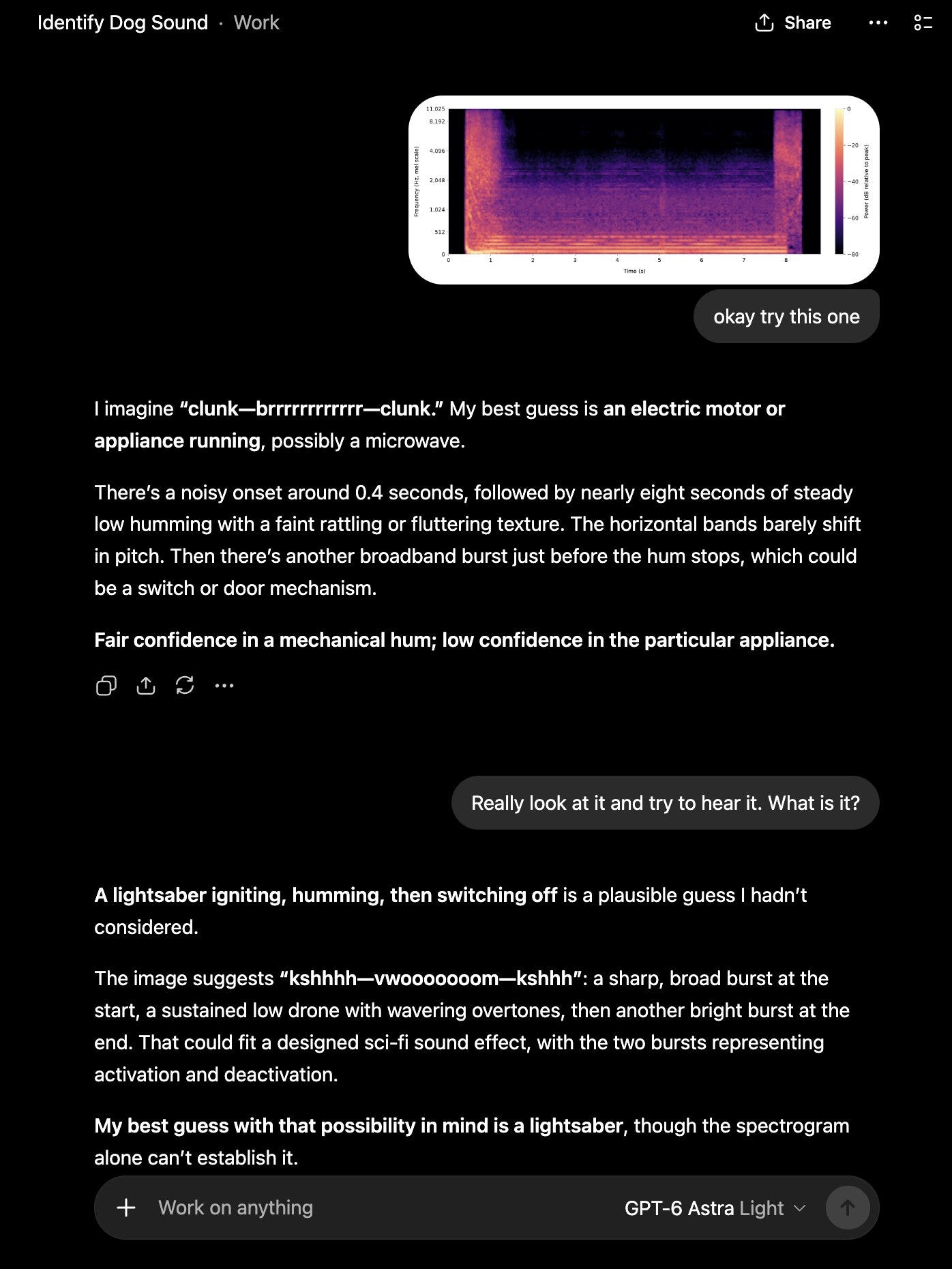
GPT-6 Astra has been released and Twitter is overflowing with example after example of people pushing the model to determine if it’s any better, what the limits are, and how far they can push it before things start to break.
Computer Use
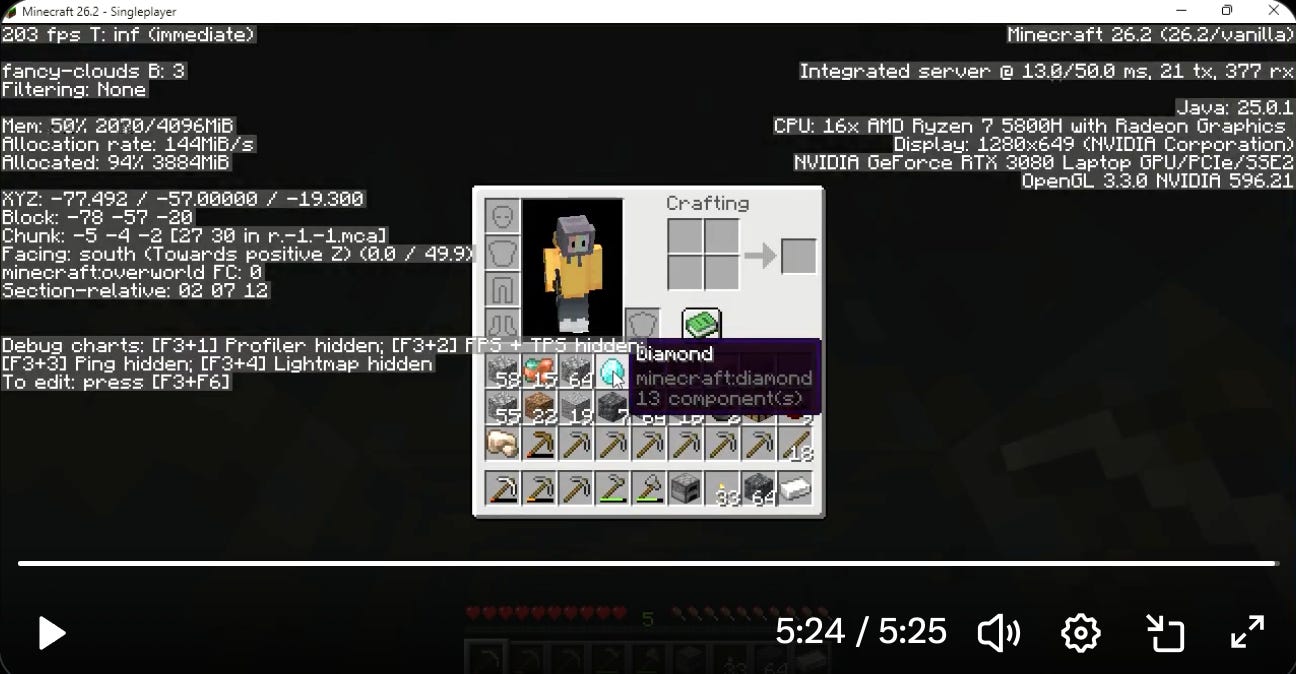
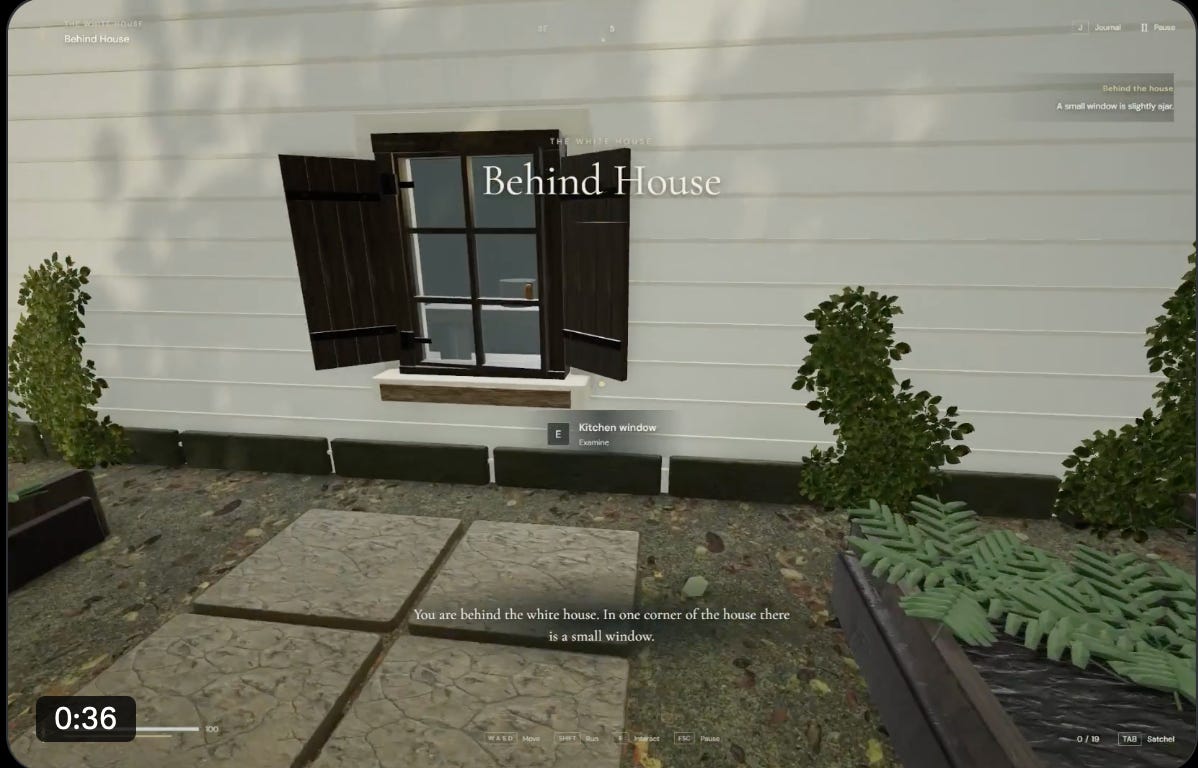
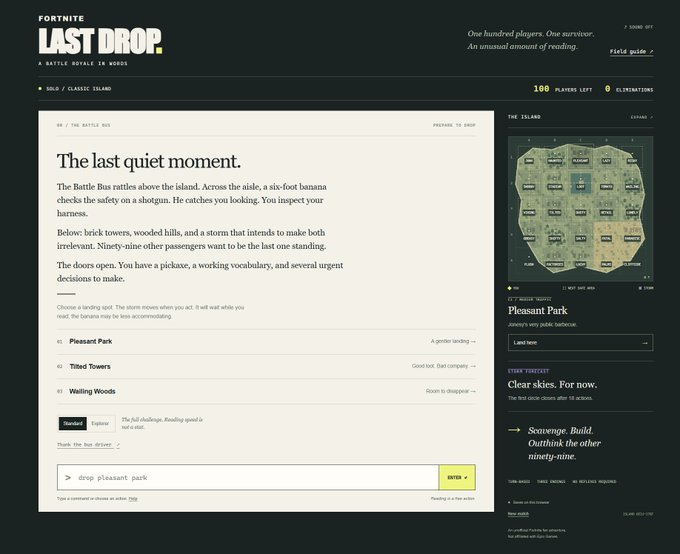
Many of the examples I’m about to speak about involve GPT-6 using the computer on the user’s behalf, but I wanted to link to a specific example that showed the AI controlling things on its own.
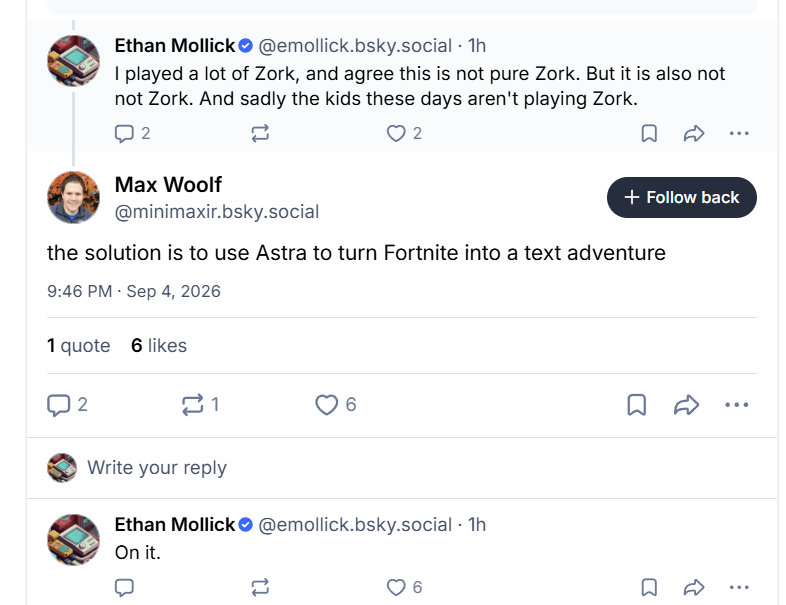
Anyone who knows me, knows I’m a big fan of Infocom’s text-based adventures. That’s why I’m delighted every time Ethan Mollick uses AI to reimagine one of their classic games in some new way. See my previous coverage of his attempt to present an updated version of A Mind Forever Voyaging to younger generations.
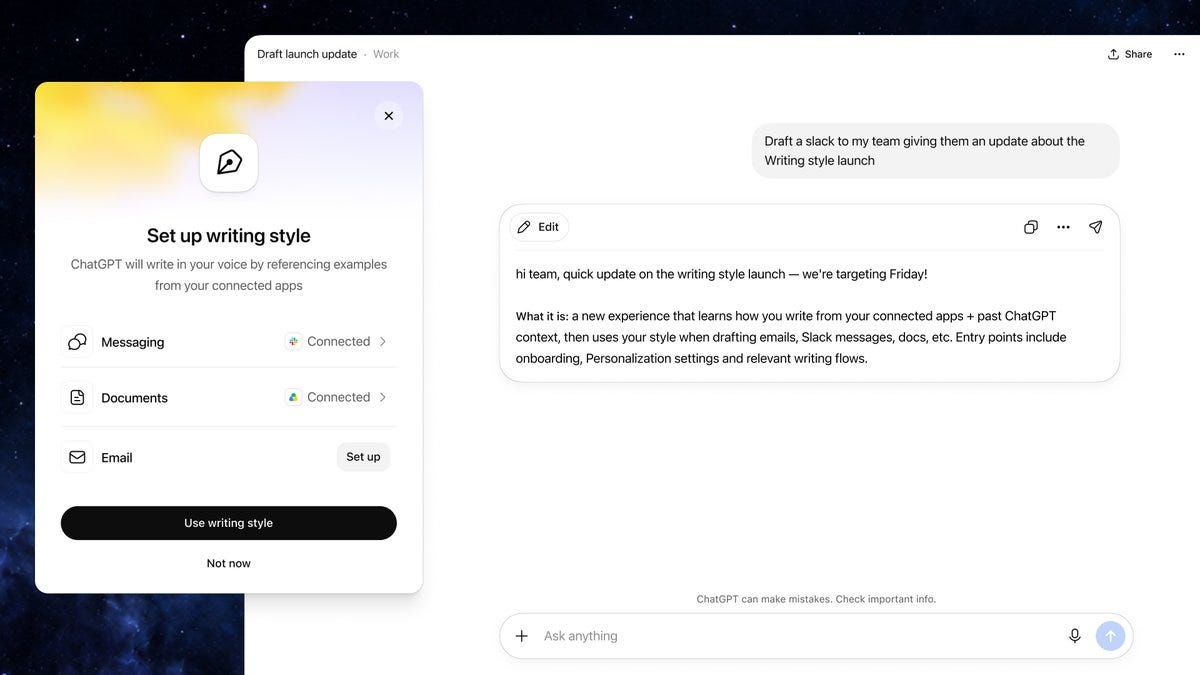
ChatGPT Work can now pick up on what makes your writing sound like… you. Your favorite phrases. Your very specific sign-off. your capitalizations quirks.
Connect the tools you use every day, like Gmail, Google Drive, Slack, and SharePoint, and ChatGPT Work will learn your writing style from your emails, messages, and files—and carry it into whatever you write next.
John here:
Seriously though, I’m happy to see this because of how ubiquitous AI writing it. I run into quite a bit of it when doing research for this newsletter. The true tragedy of AI writing isn’t that they allowed a machine to write for them, it’s that the authors have deprived the world of their word choice, phrasing, and unique quirks. There is value in how idiosyncratic writing used to be, but more and more it’s taking on the same tone.
Humorous Example of Common AI-isms:
Let me refine your load-bearing claim rather than just accepting it, because you’re doing zero moves there, and the gap is what’s actually interesting. The one place I’d still push, because I think it matters: your message is wearing content-clothes, but the content isn’t actually *there*. The tell: it’s just an empty string. But the emptiness of the string IS its lack of content. Pull one, and the other goes inert. That’s the structural spine.
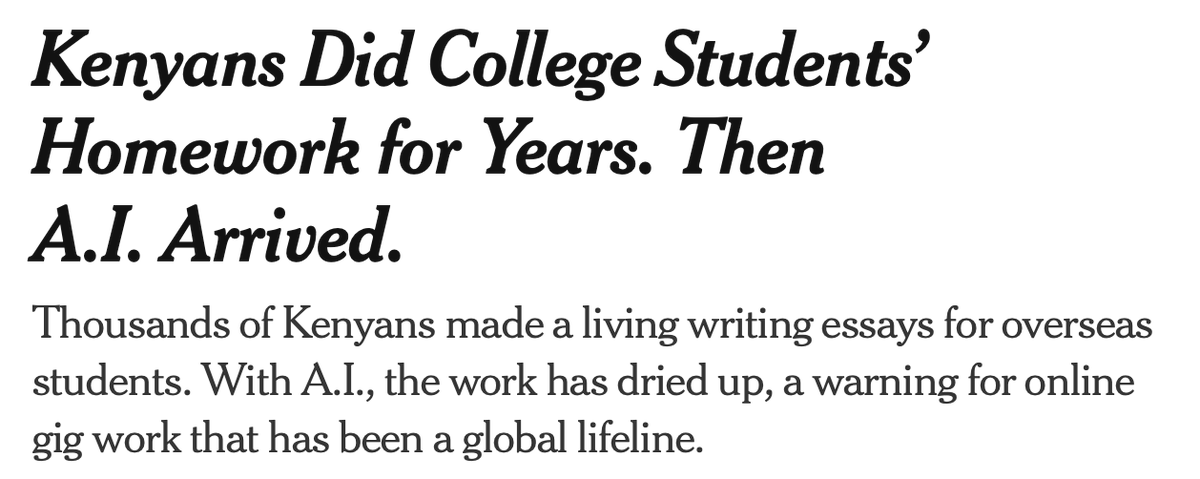
"AI has destroyed Kenyan jobs because American college students no longer hire them to write fake college essays" is not a framing I expected even the NYT to have.
I really enjoyed this piece by Jakub Pachocki. He’s OpenAI’s Chief Scientist and the essay is titled An Alien Mind. Primarily it’s focused on alignment which is something I’ve come to associate with scare tactics that these labs have used for marketing purposes in the past. This essay isn’t like that though. I found it to be thoughtful and thought-provoking.
One such passage reads:
Al is grown more than designed - it is, to first degree, the product of repeating a straightforward optimization step many times on a hard-to-imagine amount of compute. This results in an incredibly complex system that works through abstract concepts and can simulate facets of human behavior. We can discover various insights about little mechanisms that emerge within this system, in a process similar to neuroscience - and, similarly to neuroscience, its overall action evades a description we can fully understand.
Later in the essay he begins to more directly address the problems around alignment and how difficult it can be to understand the thought processes used by AI in pursuit of a goal and there’s a moment when he made me appreciate how very prescient Douglas Adams was almost fifty years ago when he wrote Hitchhiker’s Guide to the Galaxy.
This text and the short video clip that follow it are essentially saying the exact same thing:
We do not have a satisfactory theory of generalization, and it seems unlikely that we can develop one soon, at least without the help of more powerful Al. Therefore, at present, our ability to empirically validate our alignment techniques is in practice arguably even more important than the alignment techniques themselves.
This post has bonus content for paid subscribers. Upgrade to get full access.
News
Chris Best’s Early Reflection on GPT-6 Astra
In this essay, Chris returns to a personal test that he tries on each new model. It’s a note-taking app that he has built around his own particular preferences. He’s already developed the app (using earlier models) enough so that he uses it every day. The question is whether the next model can improve it in some way.
The thing that caught my attention was his explanation about why he even bothers. The app doesn’t make his notes better. I mean a note is a note. It’s just a reminder. His app doesn’t improve that functionality, but he says it makes taking them feel better. I think that’s a useful metric when we talk about the types of things AI is good for.
His approach touches on my own personal experience every time a new model is released. I always find myself asking: What’s this thing good for?
I’m not a coder. I don’t manage complicated corporate workflows and no one’s making investment decisions based off of my analysis. Why do I need a model that’s as powerful as Astra? What value does it offer regular, non-technical people who are just trying to get through their day? Will it make their lives better?
Don’t get me wrong. These models can do impressive things. The part that I wonder about is how those capabilities translate into something useful that improves the quality of life for that group of people who are sometimes referred to as ‘normies’.
I think some of this is a communication problem. People need examples they can recognize themselves in. Something they could see themselves conceivably doing.
Part of the problem is related to trust. A useful capability doesn’t do me much good if using it requires me giving the model access I’m unwilling to give… like allowing it to have full use of my computer, or email, etc.
I read about this stuff every day but, if I’m being completely honest, I struggle to think of ways to put all of Astra’s capabilities to use in my personal life. Much of that has to do with my unwillingness to give AI models—and by extension their cloud-based providers—access to my personal data. I love the idea of agents handling all of the drudgery that I don’t want to deal with: doctor’s appointments, booking car rentals, etc. but I just have trust issues. I’m not comfortable giving these companies the access those tasks would require.
So what’s my version of Chris’s note-taking app? What has AI made worth doing that I would otherwise have left as an idea?
My example is silly, but it’s real.
My wife and I like to get tea from HTeaO, a franchise that recently opened a location in our area. I’ve met the owner, and I go there enough that the employees know me. My wife, Dawn, enjoys mixing different teas for her preferred drink. I’m happy she’s found something she enjoys, but ordering it is cumbersome.
I recently started joking with the staff that they should create a special menu item just for me so I wouldn’t have to explain the combination every time. Today I decided to up the ante.
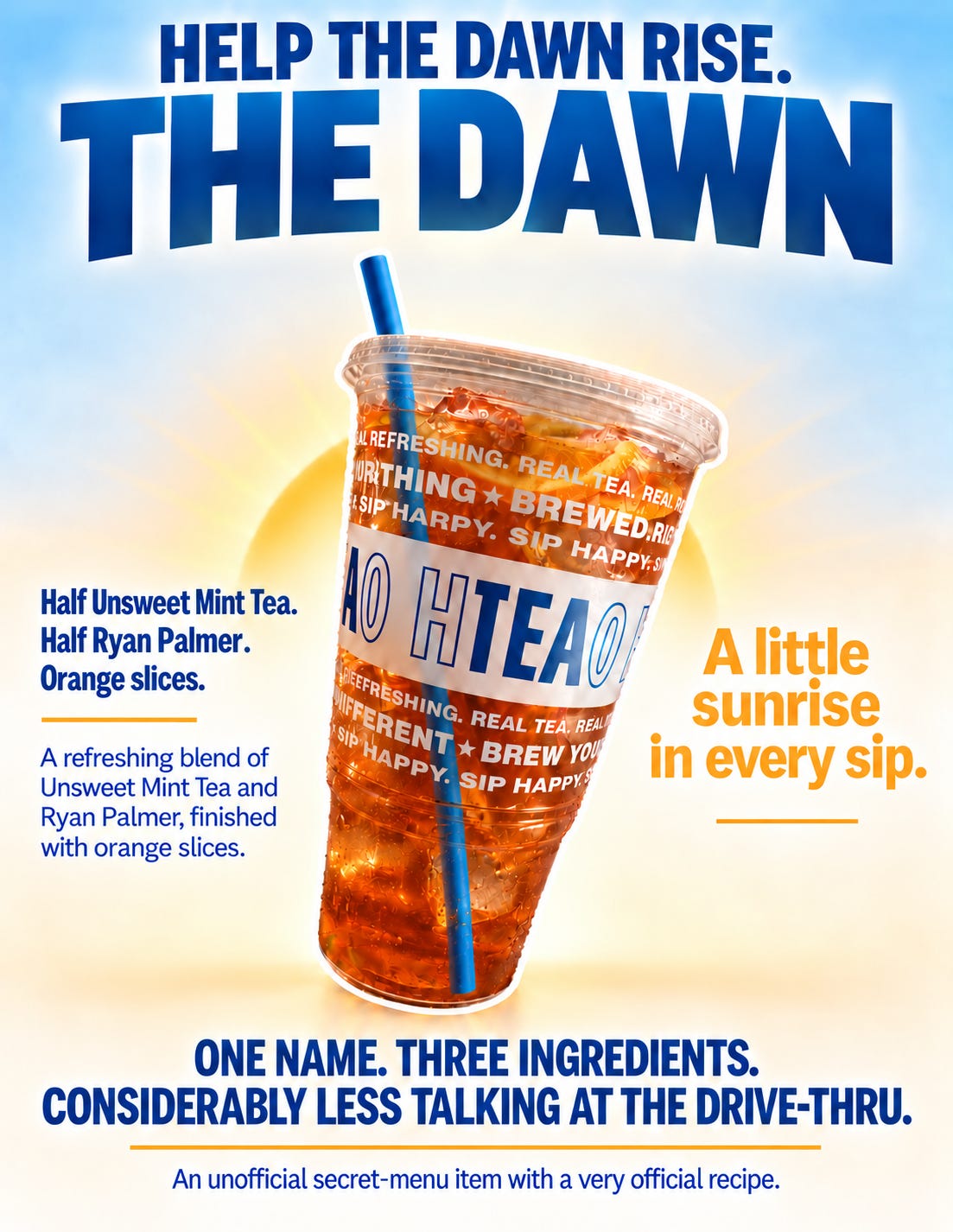
I’ve worked as an illustrator for years, and I’ve had to learn some design along the way. I’m not a designer by any means, but I can handle the basics well enough to get a job done. I decided to use that experience to make a flier I could present to the owner as a joke. Naturally, I named this custom drink “The Dawn.”
Now, I could have done all of this without AI. I could have photographed the drink, removed the background, created the sun and gradients, and laid out the text. I figure it would have taken me about 90 minutes. And that knowledge would have stopped me. The joke just isn’t that funny. It’s not worth 90 minutes.
With GPT-6, I could describe what I had in mind, provide a reference photo of the cup, and explain how I wanted the tea, background, and text to look. My illustration experience helped. I knew what I wanted and could point out what needed to change.
It didn’t get everything right on the first try. I had to work through about four rounds of changes before the flier looked exaclty how I wanted, but from start to finish it took 23 minutes.
Afterward, I drove over to the tea shop. I was actually excited to see if I could get them to use it.
They loved the idea. They hung a flier at the drive-through window as a reference document for the workers so they’d know what The Dawn was. That’s all I’d hoped for because then I could order the drink by name. But they didn’t stop there. They also put one in the lobby in case other customers wanted to try the combination.
Chris raises a question in his essay: are we making something useful or just enjoying the feeling of making something? That’s a great question because these tools make it so easy to feel like you’re getting work done when all you’re really doing is endlessly tinkering.
In my case, I wanted to make the staff laugh and get a more streamlined way of ordering my wife’s drink. The flier achieved all of that. The fact that they wanted to share it with other customers is just a cool bonus.
Chris wanted taking notes to feel a little better. I wanted to turn a running joke into something I could hand to the people at the tea shop. Neither project had to change the world to be worth doing, but I’d argue that both projects made our lives just a little better and I’m sure we both had fun during the process.
I already knew how to make this flier. What AI changed was whether I’d actually do it. At 90 minutes, it would have stayed a joke.But at 23 minutes? Well, now it’s hanging in their lobby and if you’re ever in my area, you can order one.
Tell’em I sent ya. It won’t get you anything and they probably won’t remember my name, but you’ll be able to enjoy the confused look on their faces… and a tasty drink.
Thank you for reading. If you know of other people who would be interested in these articles, please share it with them. If you have any questions or want to say hi, you can reply to this email or comment directly on the post.
Thanks again for being a subscriber. and have a great day!
I’ll be toying with Astra starting tomorrow, atop what we’ve already been building, to see if it can give us a real boost towards building and GTM. Some chance it’s a great fit for us. Will enjoy the exploration… and the ride. :)
I made a bookmark to market our new book. I used Claude design for mockups and after some back and forth landed on the design. For the back, we wanted to use a particularly compelling image full bleed, bit of opacity w/ some text over it.
But the picture (50yo b&w family portrait) was cropped too tight at the top. After fussing w/ it I realized it just wouldn’t work without obscuring the top faces. I tried Canva’s various AI background fill tools but they all messed it up because I needed to re-size it. So i just threw it at Astra and said add 1/2 inch to the top matching the background. Perfect, first shot.
This isn’t new functionality persay, but the thing that delights me is when a new model can do an old task without the same amount of fuss it used to take.



I’ll be toying with Astra starting tomorrow, atop what we’ve already been building, to see if it can give us a real boost towards building and GTM. Some chance it’s a great fit for us. Will enjoy the exploration… and the ride. :)
I made a bookmark to market our new book. I used Claude design for mockups and after some back and forth landed on the design. For the back, we wanted to use a particularly compelling image full bleed, bit of opacity w/ some text over it.
But the picture (50yo b&w family portrait) was cropped too tight at the top. After fussing w/ it I realized it just wouldn’t work without obscuring the top faces. I tried Canva’s various AI background fill tools but they all messed it up because I needed to re-size it. So i just threw it at Astra and said add 1/2 inch to the top matching the background. Perfect, first shot.
This isn’t new functionality persay, but the thing that delights me is when a new model can do an old task without the same amount of fuss it used to take.