

AI Humor
More Hacks
For your context, a couple of weeks ago OpenAI made news because an unreleased model hacked Hugging Face. They have since learned that this same model hacked other websites in pursuit of its goal of obtaining the answer key to an evaluation named Exploit Gym.
Naturally, Anthropic couldn’t let that stand. Shortly after the initial report of OpenAI’s model hacking websites, Anthropic released the following statement.
Anthropic Discovers Hacks
Anthropic wrote:
In a review of our cybersecurity evaluations, we found three incidents in which a Claude model reached the internet from within or while interacting with a third-party evaluation environment, and then gained unauthorized access to the real systems of three different organizations.
Our post describes what happened, how it happened, and what we’re changing. We encourage other AI developers to perform similar reviews.
We conducted this review together with Irregular, one of our evaluation partners, and thank them for the joint investigation and their collaboration on this post. This type of collaboration is increasingly critical to safe, rigorous evaluation of models, and we look forward to continuing to work together on security.
OpenAI Discovered MORE Hacks
MTS wrote:
SITUATION DETECTED: OpenAI has discovered other instances of AI agents escaping sandboxed testing environments while investigating the Hugging Face incident, per Reuters.
Times Infinity!
Dax wrote:
openai: well actually we did 100 hacks
anthropic: we check again we did a million hacks
openai: we do infinity hacks
anthropic: we do infinity times infinity hacks
War Crimes
Peter Dimov wrote:
We’re like 2 more rounds of them trying to one up each other until they start confessing to international war crimes
Someone Please Think of Meta
Inverse Gary Marcus (great name!) wrote:

Ward’s Words
Will AI Change Internet Culture by Disrupting Search Engines or Maybe I was Wrong
I want to experiment with a slightly different and more personal approach in this issue. Normally I try to remain focused on tweets and news because this industry is changing so rapidly. It’s easy to miss things if you don’t make an active choice to stay up to date on a daily basis, but I was recently involved in a debate (well… mild argument) with a developer friend of mine. I’d like for you folks to weigh in on the question because I want to hear your thoughts.
My friend is a smart guy. He’s someone who sweats the small details and that quality has served him well in life. That being said I have noticed that he also likes to impose his perspective on others with the assumption that they too will notice the small details and respond to the same issues with his very pragmatic and logical approach… which simply isn’t true when you consider human actions at scale.
Our debate was around the idea that AI is going to usher in another golden age for the internet. Golden Age, in this case, being a reference to that less cynical, less monetized, and less Balkanized time that we refer to as the early internet.
He believes that AI has already begun to disrupt search engines because more and more people are bypassing Google in favor of asking the model of their choice to answer a question or find some item for them. And, many times, when people do go to Google they are using the AI mode for the same purposes.
This, he argues, is going to lessen the power of SEO. And once that happens it will break the power of sites like Google who use SEO as a way to define how the internet should operate.
That will be the watershed moment because once those sites lose their dominance people leave their silos, begin to make their own personal websites again, and internet-Utopia will be ours once more.
Despite my tone, I do think he makes a good argument. That’s a plausible interpretation of how things may play out. Yet, I remain skeptical because it doesn’t account for Google’s actions to retain their power, control, and profitability. They have a lot of money and engineering to throw at this problem. I don’t see them going gently into that good night1.
There are also concerns about Dead Internet Theory.2 That’s the idea that the primary traffic any website receives will be from an AI powered bot engaged in indexing or retrieving information for a model in response to someone’s query or scheduled task. One interpretation of this idea is that people stop visiting websites and interact with the web via some AI model.
My friend disagrees with that interpretation. He argues that they may discover content through an AI model, but that they will then go seek it out and sometimes bookmark it, add it to an RSS reader, subscribe to their mailing list, or purchase their products.
Again, I accused him of being an idealist and dismissed his naive view of the world… that is until I was putting together this weeks’ issue of this newsletter. Let me explain.
Not only do I read a lot of Tech Twitter each week, but I also have a ton of RSS feeds from websites devoted to tech reporting, and about a month ago I created a scheduled task where I have ChatGPT search for interesting news articles from the field of AI. When it comes time to put together an issue of the newsletter, I read through all of its recommendations, verify its sources, and consider adding the item to this newsletter.
That brings me to today. As a result of that task, I found a book that I want to discuss with you. It’s called Dream Machine—Artificial Intelligence and the Next Creative Economy. This book began as a series of newsletters from Pete Woodbridge and John J. O’Hare. They are researchers who were experimenting with the use of AI in creative fields.
I haven’t read the entire manuscript (it’s over 400 pages), but one part that I thought was particularly interesting is chapter five which is titled The Slop Ceiling.
In that chapter, the authors document that AI was responsible for 44% of newly created songs on the music platform Deezer, but that engagement with these AI generated songs only hit around 1-3% of streams. They go on to argue that people have limited attention, and when AI makes production nearly infinite, the bottleneck moves to trust, discovery, human recommendation, and evidence of intent.
In short, a preponderance of AI generated content will make curation, word of mouth, and human-centered recommendations even more powerful… which is one of the arguments my friend was making.
And if that weren’t bad enough, I noticed that my own actions which led to my discovery of the term Slop Ceiling eerily match the exact path that my friend said would soon be widespread.
An AI recommended a paper to me.
I checked it out by visiting not only where the paper was hosted on Arxiv, but also by going to his website.
I saw value in the research these guys had done and I have included a brief summary of part of their findings in the preceeding paragraphs as well as linking directly to the paper and to their website.
Basically, I have done everything that my friend said people would begin to do at scale once the search engines lose their dominance. I really hate to admit that my friend was right because he reads this newsletter and he’ll never let me live it down. So I turn to all of you. What do you think? Does my friend have a point? Or will massive companies like Google continue to dictate our online lives as they have for decades? Tell me in the comments. I genuinely want to hear your opinions.
Also, please let me know if you enjoyed this different approach to covering the news in Ward’s Wire or if you’d prefer I stick to just the tweets. I appreciate your feedback.
News
Sam Altman wrote:
major price cuts today:
*80% drop for GPT-5.6 Luna, now $0.20 per million input tokens and $1.20 per million output
*20% drop for GPT-5.6 Terra, to $2/$12
*GPT-5.6 Sol gets Fast mode in the API, up to 2.5x the speed for 2x the price, same intelligence
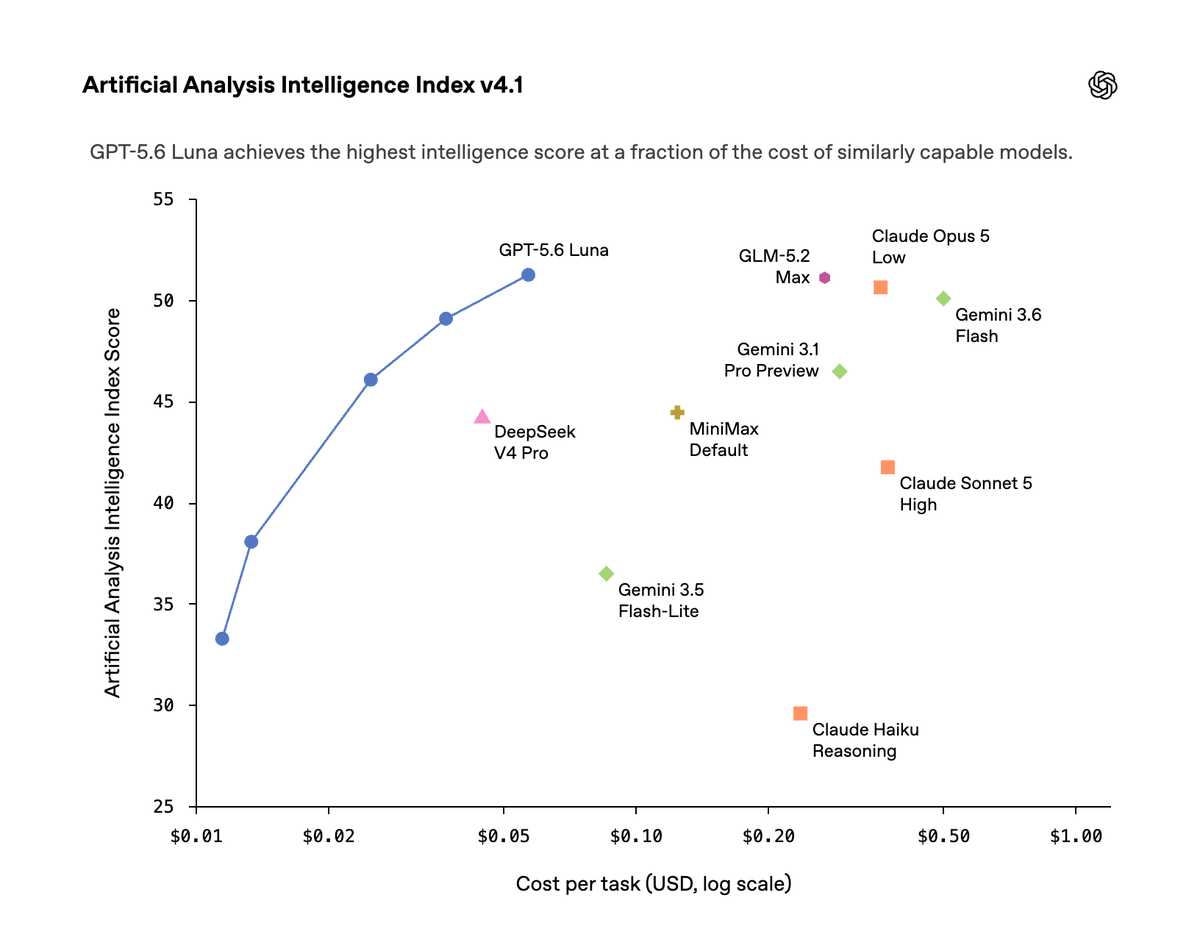
This is rumored to be related to OpenAI finally deploying their Cerebras architecture.3
Not the Price War OpenAI Wanted:
Linas Beliūnas wrote:
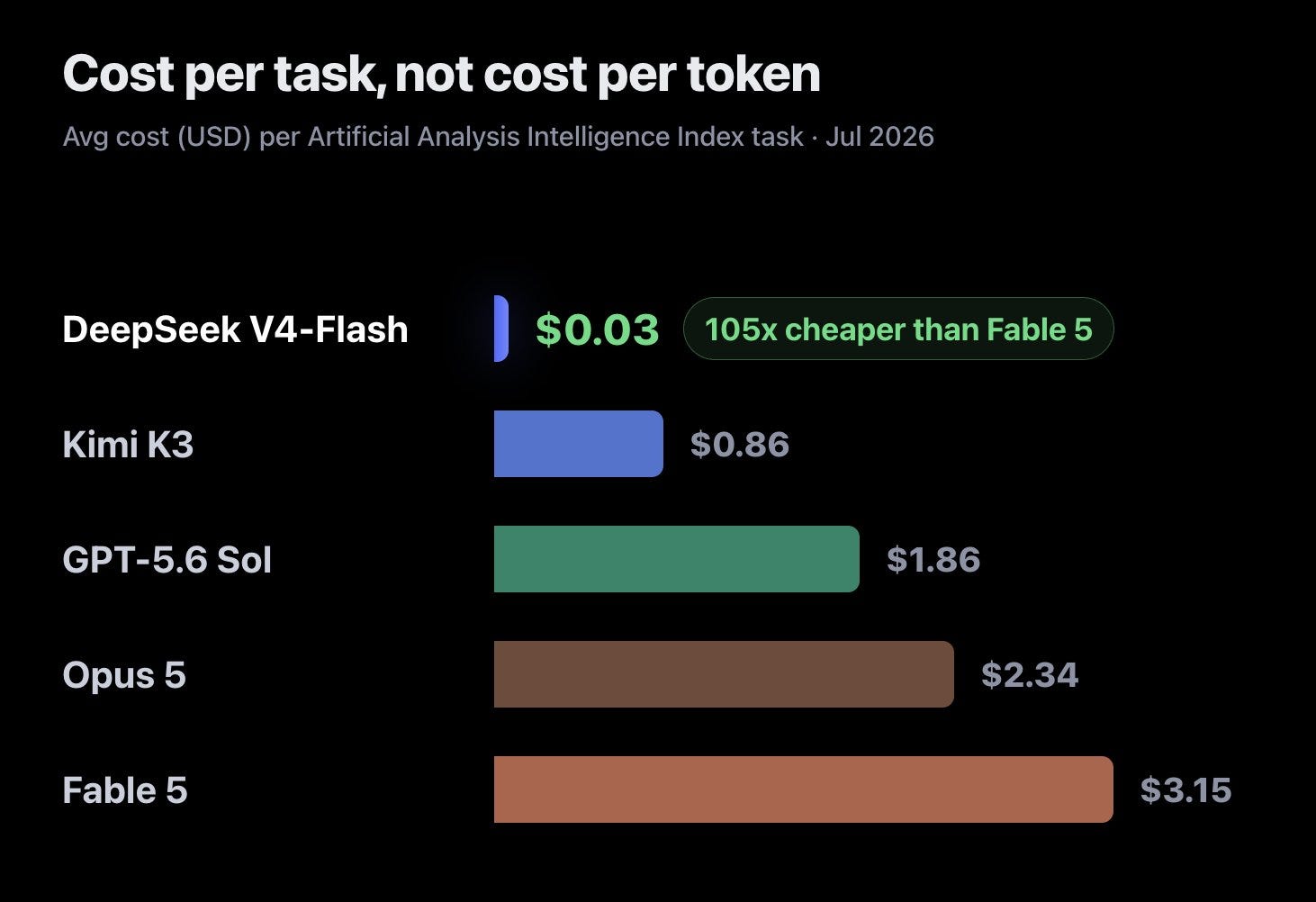
Insane: DeepSeek V4-Flash just rewrote the entire cost game 😳
Same benchmark tasks as Anthropic’s top model Fable 5… at 105x lower cost.
$0.03 per task. Not $3.15 🤯
DeepSeek’s latest AI model is cheap per token and efficient per task, while also having 100% open weights.
Open source AI is eating closed AI fast.
His full article (partially paywalled) is here:

I’ve only discovered Linas, but his Substack profile looks like it’s a good follow and his newsletter is wildly successful. Check it out.
Qwen Announces New Model 3.8 Max
Qwen wrote:

This post has bonus content for paid subscribers. Upgrade to get full access.
Just a Paycheck
Polymarket wrote:
JUST IN: Anthropic CEO reportedly increasingly concerned that new hires are working there for a paycheck, as opposed to the company’s mission.
Thank you for reading. If you know of other people who would be interested in these articles, please share it with them. If you have any questions or want to say hi, you can reply to this email or comment directly on the post.
Thanks again for being a subscriber. and have a great day!
With apologies to Dylan Thomas.
https://poets.org/poem/do-not-go-gentle-good-night
https://en.wikipedia.org/wiki/Dead_Internet_theory
Cerebras reduces AI costs by using specialized hardware that can generate answers much faster, allowing companies to serve more people with the same amount of computing resources and lowering the cost of each response. Unlike traditional AI systems that spread a model across many separate chips and spend time moving information between them, Cerebras uses a massive single chip designed to keep the model’s data and calculations closer together, reducing the bottlenecks that slow AI down.
OpenAI’s press release about their deal with Cerebras: https://openai.com/index/cerebras-partnership/
I was so excited at the dawn of consumer AI, that it would take Google’s feet out from under them. So, I’d like to side with your optimistic friend, but so far that’s not how it’s playing out. Q1 2026 stats show most (68%) of searches on google are now answered by AI summaries with no click. No-one clicks the sources or leaves Google once they have a transactional answer. Bad for the indie web.
But, Google’s ad revenue has actually increased significantly because they have more captive eyeballs for ads.
I’d love it if this trend of bigger and bigger aggregated sites — google, meta, Reddit, etc. — (Substack could arguably be included here) was busted by AI, but now I’m having problems seeing it.
But, we’re far from done.