

Ward’s Words
I’ve been thinking about the best way to expand on the prompting concepts I introduced in last week’s newsletter. It’s more than I can cover in a single issue, so I’m putting together a short downloadable guide.
Most guides like to focus on pre-written prompts that you can paste into a chat box. Those can work. But I think a stronger approach is to help people understand how to work with AI and what’s happening behind the scenes when you do. That will help you understand how to work with AI rather than handing you prompts to copy.
AI Humor
hope hopes hoping wrote:
Claude .md? He’s a doctor too?
In case you’re not already familiar with Markdown, .md is the file extension for documents created in that format. Markdown was originally created by John Gruber as a way to easily format text by wrapping the words you want to format with symbols. You can read more about it here.
Markdown is relevant to AI because it’s an easy way to communicate priority and structure through the use of header tags and formatting.
Trung Phan wrote:
With Zuck shutting down Horizons World (the metaverse social platform), here it the updated competitive landscape for augmented reality:

Horizon Worlds in conjunction with the Meta Quest was meant to be the gateway that would introduce people to virtual reality. Despite billions of dollars of investment into the program it never experienced widespread adoption.
AI News: Jobwatch Edition
AI continues to redefine (and maybe destroy?) employment opportunities. At the very least you can say it’s causing everyone to reconsider their career choices. This is a topic that continued to pop up over and over again during the past two weeks. So, I’ve collected some stories from both sides to show the spectrum of the changes facing the job market.
Both Oracle and Meta have recently announced large layoffs. There are reports that Amazon has laid off a total of 30,000 people this year. Atlassian has laid off 1600. Jack Dorsey’s Block laid off over 4000 employees… only to rehire many of them less than a month later.
There are a lot of variables that go into decisions like layoffs, i.e. macroeconomic conditions, over-hiring, or cost discipline. AI is certainly a factor as well, it’s not entirely clear exactly how much of these layoffs were caused by AI adoption versus using AI as cover for other factors. Either way, AI is disrupting the workforce, but is that the story here?
I don’t believe it is. AI is separating and revealing those who reorganize around new capabilities from those who don’t.
The past week has surfaced stories about people who have chosen to use AI to redefine what work means to them. Here are several examples:
This first story offers a path forward that’s accessible to most people. There are dozens of stories about various business leaders vibe coding their way to some novel business model, but the story below is about a blue collar worker leveraging AI to reshape how his company does business.
Todd Saunders wrote:
…the combination of someone in the trades with deep domain expertise and Claude Code will run circles around your generic software.
I talked to Cory LaChance this morning, a mechanical engineer in industrial piping construction in Houston. He normally works with chemical plants and refineries, but now he also works with the terminal…
…He built a full application that industrial contractors are using every day. It reads piping isometric drawings and automatically extracts every weld count, every material spec, every commodity code.
Work that took 10 minutes per drawing now takes 60 seconds. It can do 100 drawings in five minutes, saving days of time…
The tweet continues from there providing more detail about how Cory is using AI to supercharge his abilities and his business. Best of all, there’s a 13 minute interview where you can hear Cory tell his story in his own words. Click through for the rest.
The next example is interesting because it’s a case where AI did not take away jobs, but rather led to the creation of new jobs.
Milk Road AI wrote:
A guy built a fake band, put it on Spotify, and 80,000 people had no idea. Then it got even weirder and the tech behind this is wild:
- Used Suno AI to generate every song sounded completely real.
- Created AI music videos with fake members and faces.
- Built fake bios and a Tokyo address to sell the story.
- 80,000+ monthly listeners, fans had it in their Spotify Wrapped top 5, merch was selling.
- Community sleuths exposed it and the AI-generated hands in the videos gave it away, creator traced to Europe, not Japan
He goes on to explain how he then went to Japan, recruited 7 real musicians, and hired them to hold concerts playing his songs. They’ve since played multiple shows and have many more booked.
Our next example is about how AI is making it possible to build for incredibly niche markets.
Falco Girgis wrote:
Someone said that our Sega Dreamcast ports were a pointless waste of time today and that nobody will play them…
Meet my son, who was the first kid to ever play Mario 64, Doom 64, Mario Kart 64, Starfox 64, Sonic Mania, Grand Theft Auto 3 and Vice City, and now The Legend of Zelda: Ocarina of Time—some of my all-time favorite games from childhood—on my favorite console, the Sega Dreamcast, for his first play-throughs… and his little sister plays with us as well…
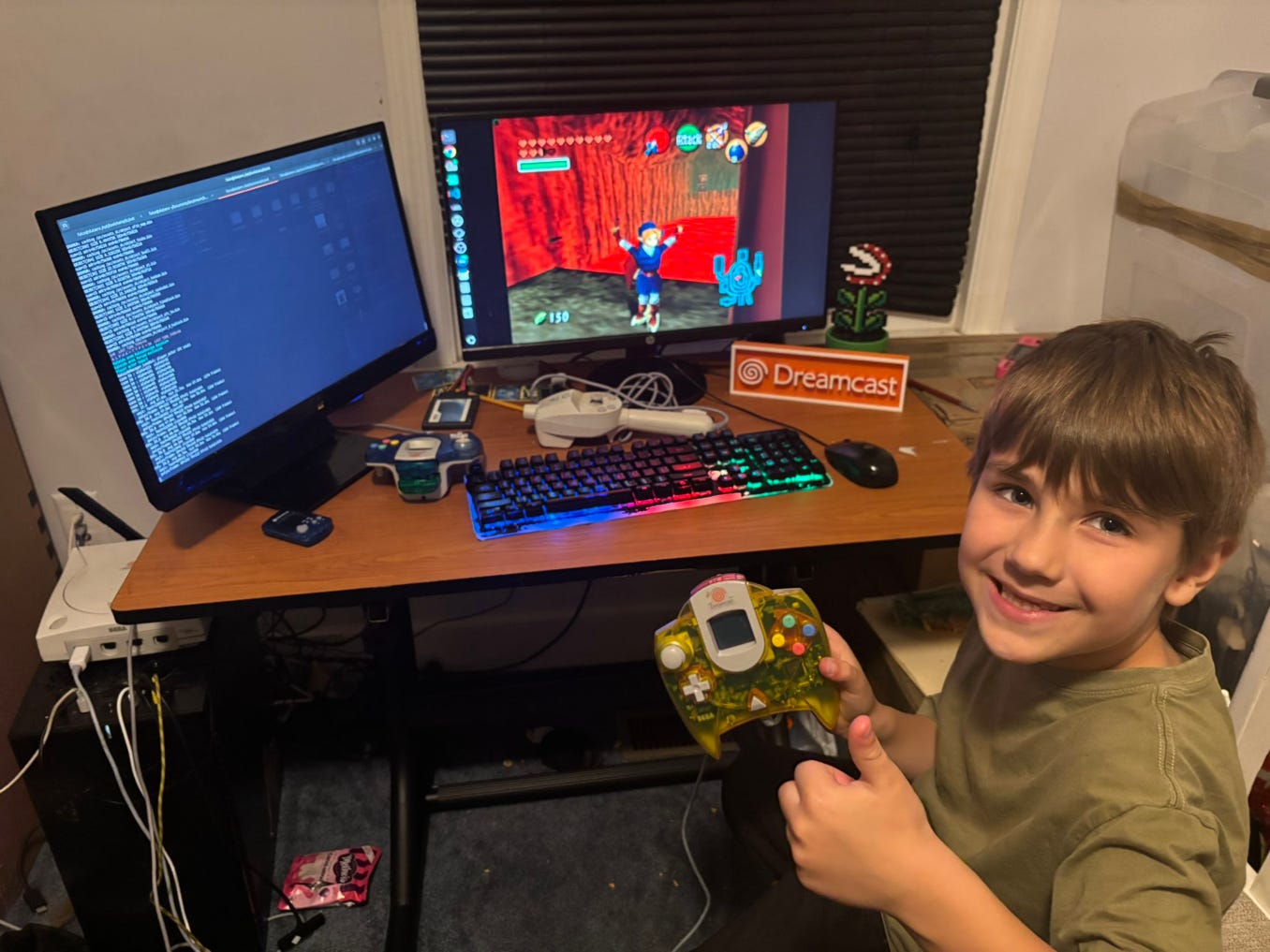
He is pointing to real resurgence in classic gaming. We’re seeing a lot of new and ported video games being created for classic systems because of AI. I’m not sure that these games will make a lot of money, but the communities devoted to retro computing are passionate—so, they will probably make some.
Lastly we have a quote that documents the observed pattern.
Marcus Pittman wrote:
Every creative person I know that has embraced AI as a tool for their art has produced more content this month than all of last year…
The trick to making this work is being willing to redefine your workflow. That means reconsidering how work gets done rather than forcing AI into what you’re already doing.
For example, consider digital photography. When it started there was a tendency to treat digital photography the same as film. People would take a limited number of shots, use careful staging, and have a dedicated step for post-processing. However, as the medium matured, people began to realize that they could lean into the abundance offered by digital cameras. This gave rise to burst shooting, instant review, and iterative composition.
Changing the workflow led to increased productivity, more serendipity, and made photography more accessible to non-professionals. The best individuals and companies will figure out ways to alter how they approach and resolve problems rather than trying to retrofit AI on top of what they are already doing. Only a willingness to change can unlock the advantages AI offers.
Who better to highlight this tension between trying to force existing workflows onto AI rather than redefining how you work than Jensen Huang?
Ricardo wrote:
…Jim Cramer asked him [Jensen Huang] why companies are laying people off if AI is supposed to make everyone MORE productive.
Jensen’s answer:
“For companies with imagination, you will do more with more. For companies where the leadership is just out of ideas, they have nothing else to do. They have no reason to imagine greater than they are. When they have more capability, they don’t do more…”
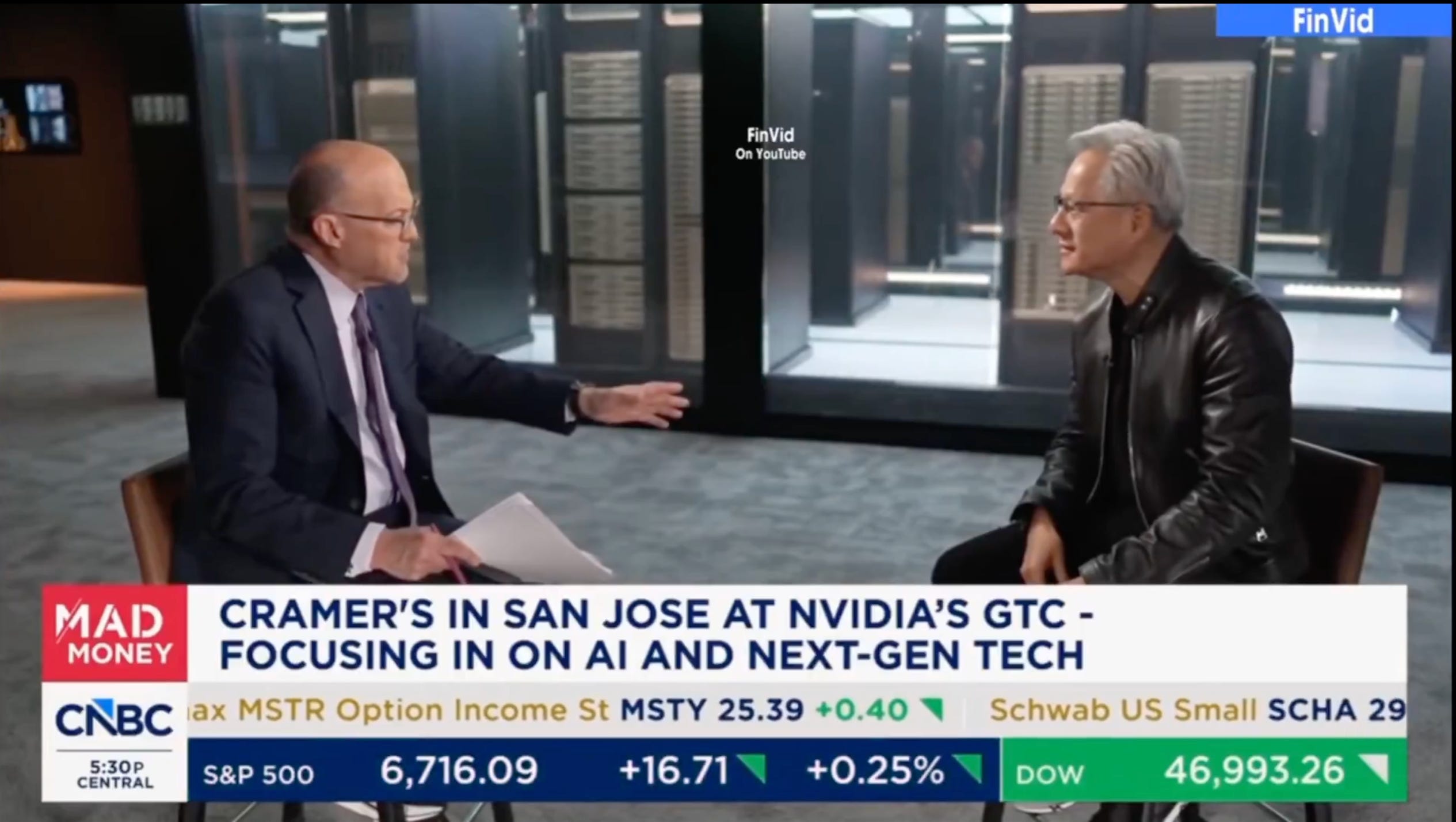
Whether we run a company or not, we all face the choice of how to approach AI. We can use it to redesign our work or try to retrofit AI into our existing processes. There isn’t a universal answer that’s right for every task but we need to be aware that these choices are not simply, ‘Should I use AI for this?’ but rather ‘Should I surrender autonomy for this task?’
Think about customer support. Much of that work operates within clearly defined decision trees—scripts, escalation paths, and predefined responses. That makes it a natural candidate for automation.
When you hand that kind of system to AI, you’re not just saving time, you’re choosing to delegate a structured slice of decision-making. In many cases, that may improve the experience. Response times drop, language barriers disappear, and consistency increases.
But the more important question isn’t whether AI can do the job. It’s what you do with the capability it creates.
Do you eliminate the role entirely? Do you keep a human in the loop for edge cases? Or do you redirect that capacity into new work: analyzing patterns, improving systems, or proactively engaging customers?
These are the types of questions we should ask at the individual level every time we consider using AI. What are you gaining? What are you losing? What new tasks could you add to your workflow if the AI handled the mundane and repetitive work?
Thanks again for reading! If you know of other people who would be interested in these articles, please share it with them. If you have any questions or want to say hi, you can reply to this email or comment directly on the post.
I once had a job (remember systems analysts?) that was 100% to optimize workflows with new better tech (bureaucratic ones, the best).
Hardest job in the world. I quit.