(As a side note, getting ready for this DevDay is the first time I remember ever, in OpenAI history, saying ‘this is too much stuff to launch’.)
Did they deliver? Let’s take a look.
News
DevDay 2026
You can watch the official DevDay video at the link. It’s right at 55 minutes. Unlike Apple it’s a live presentation with all of the excitement, drama, and mistakes that brings. This will be of more interest to developers than it will be to regular people who might be curious, but if you are a developer considering ChatGPT it’s worth your time.
The Announcements
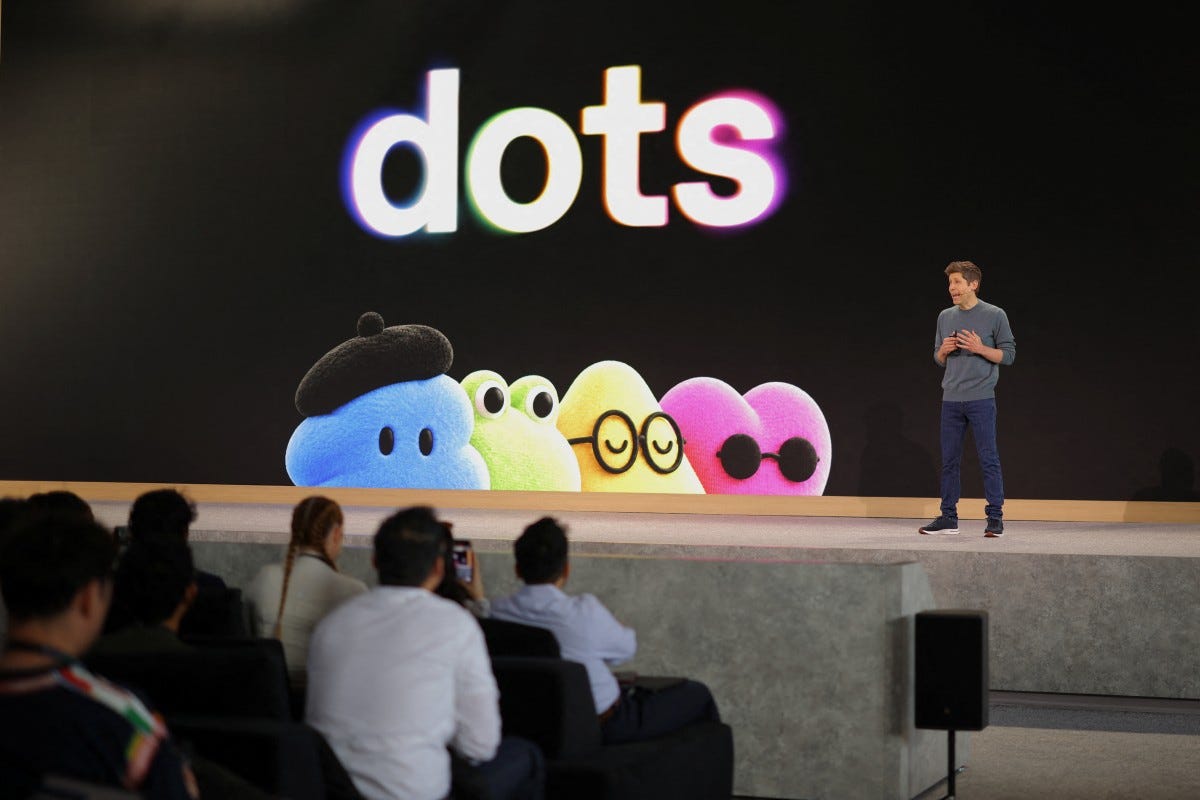
Dots
The biggest announcement was for OpenAI’s agent layer which they are calling Dots. This are always-on, persistent agents powered by GPT 6 Astra (although you can change the model). Each agent runs on a cloud-based compute and browser. It can connect to apps and work proactively on any goal you set. At present they are only available on the Pro and Business Premium plans.
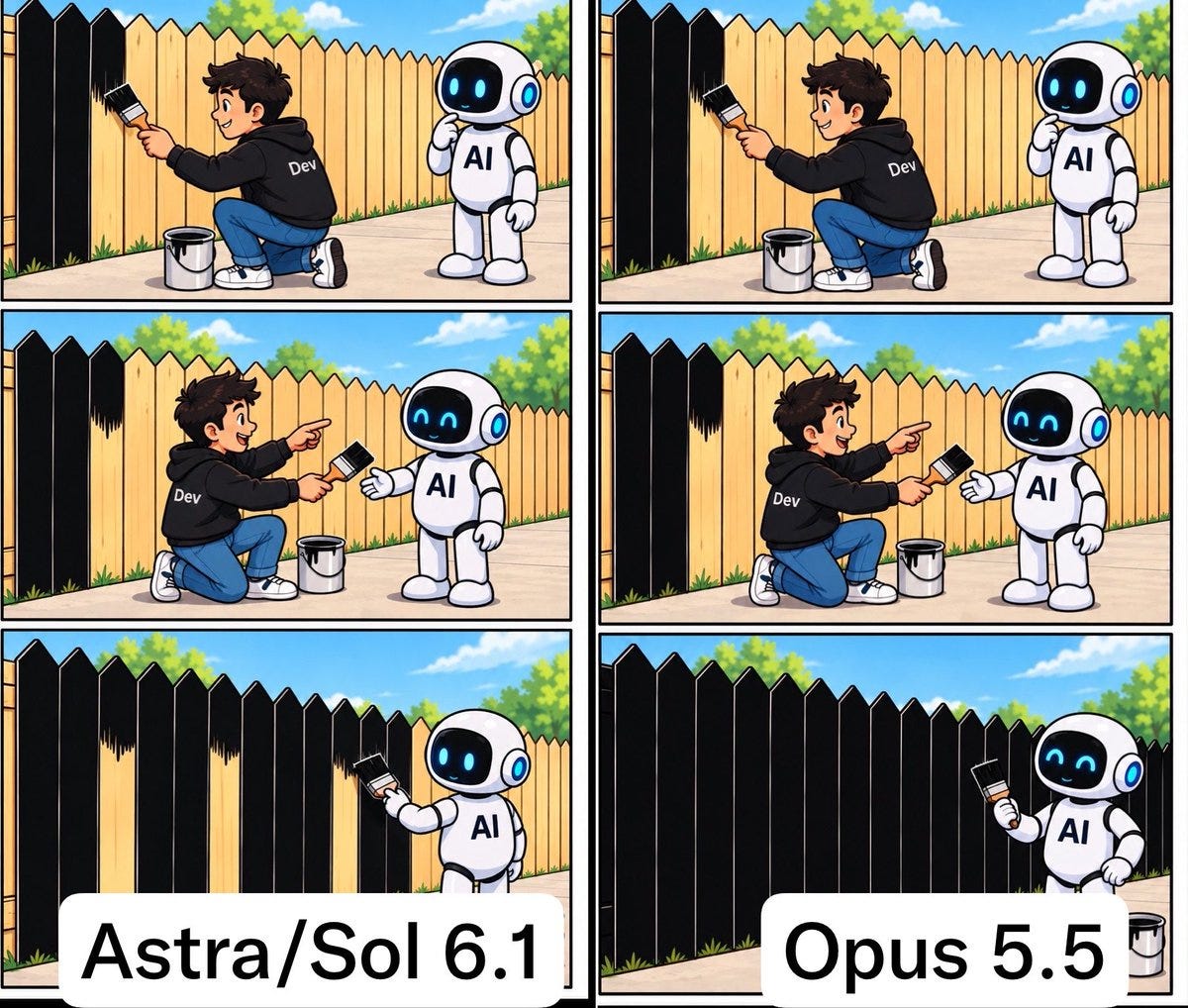
ChatGPT 6.1 Sol
OpenAI referred to this release as a major upgrade to GPT-6 Sol. It is said to provide near Astra-level performance at roughly one-fifth of Astra’s price.
ChatGPT Space is your new home for creating and collaborating with your team and AI. In Space, you can work with pages—a new kind of interactive document with charts, images, checklists, and dashboards. ChatGPT can build pages for you based on the work you need to get done or the context of your conversation. Edit pages directly with your team, or tag ChatGPT, Codex, or your dot to help with action items and keep pages updated from your connected sources. Rolling out today to Pro, Business, and Enterprise plans. Create and edit pages on web and desktop; view on mobile. Collaborative slides and other formats are coming soon.
Ultrafast is available today for GPT-6 Astra in Codex, ChatGPT Work, and the API, with GPT-6.1 Sol coming soon. To access it in Codex and ChatGPT Work, we’re introducing Pro 500—a new plan with our highest usage limits (25x Plus) and access to Ultrafast.
Most people would consider 500 dollars a month to be a bit pricey. For that reason, I’m afraid that this tier will remain out of reach for everyone who is not making Andrew Sniderman 🕷️ levels of money.
Tomorrow we are re-opening the Pro $200 subscriptions to new subscribers, but together with it we are also changing how we calculate the usage for it. In effect, if you do the math, it will net out at half the dollar in API spend compared to the old Pro $200 plan. Now that it’s said, let me explain why this is happening and why you will still get more work done than if you were on the Pro $200 subscription one month ago. (a) We didn’t want to compromise in other ways and are committing to not reintroducing the 5h limit…
So they have cut usage in half from what it had originally been, but they removed the 5 hour window and added features that don’t draw against this usage (dots).
This post has bonus content for paid subscribers. Upgrade to get full access.
Agentic Disruption
There’s a lot of interesting speculation about the ways in which the mass adoption of personal agents may disrupt society. First among these are Credit Card Rewards.
Hypothesis: we’re at peak credit-card rewards. As people use personal agents to shop, it’ll change the economics that support them. Credit-card rewards were designed for a world of imperfect human optimization. Optimizers like me know which card to use when, how to maximize credits, and how to redeem points well. For me it’s a fun game to try to maximize value from the credit card companies… but they make heaps from my dear wife who could care less about them :( But AI agents can make every consumer a near-perfect optimizer, easily. Even though my wife doesn’t particularly care, when she buys using an agent intermediary, it’ll pick the right card for her. Once that happens, much of the cross-subsidy, breakage, and behavioral arbitrage that makes today’s rewards so lucrative gets competed away. The rewards def won’t disappear, but the current category model will probably change.
Agents may also change our relationships with retail as a whole.
…today businesses make enormous amounts of money from consumer inertia with stuff like forgotten subscriptions, missed return windows, unclaimed warranties, price discrimination, unused credits, annoying cancellation flows, failure to negotiate, failure to comparison shop, etc. individually none of these are worth 20 minutes of your life so businesses keep the spread.
an agent changes the economics cuz its marginal cost of vigilance approaches ~zero. ppl will be automatically empowered…
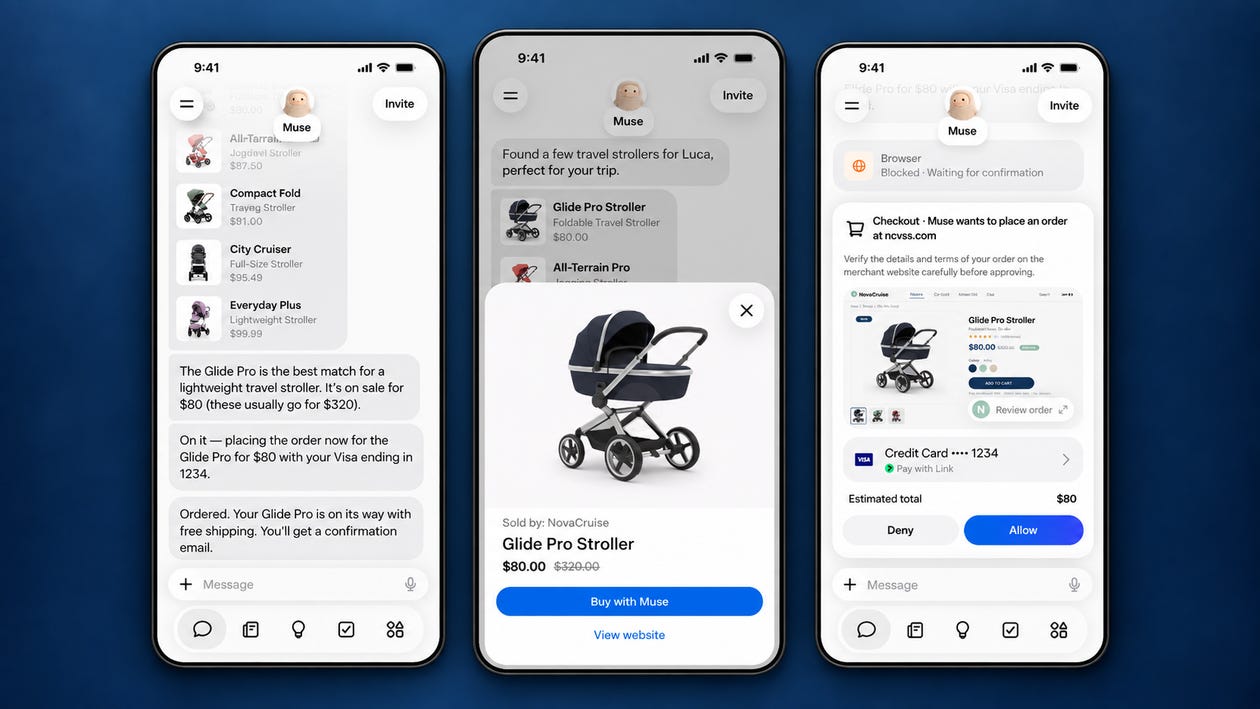
Amazon blocks Meta’s Muse AI assistant in new standoff over agentic shopping.
The problem, Amazon says, is that it never agreed to any of it. Meta didn’t tell Amazon that Muse would access its store, the agent doesn’t identify itself when it browses, and it appears to capture and store customer credentials, which the company says could create privacy and security risks.
In last week’s issue, I covered how Shopify had taken the exact opposite approach. They partnered with Muse to ensure its agent could navigate Shopify stores and allow users to make purchases as desired.
Now I am seeing reports that this move by Amazon has resulted in an uptick in sales from Shopify vendors, Walmart, and sometimes people are going directly to a retailer’s site to purchase from them directly rather than going through Amazon.
By blocking Muse, Amazon seems to be protecting its ecosystem, including its valuable advertising business. If consumers outsource their shopping to an agent like Muse, presumably the value of ads goes down, as Muse responds to an objective set by the user rather than to impulse purchases driven by ads.
At present, all we have is anecdotal evidence and the fact that investors have chosen to reward ShopPay for the decision to partner with Muse. We won’t know for certain if Muse is making a difference until earnings are released, but this quote from the second report is an interesting trend to consider:
In fact, I’d argue an agent’s order is worth slightly more to Shopify than the average human one. The share of platform volume running through Shopify Payments keeps stepping up: 64% in the year-ago quarter, 67% in this year’s first quarter, and 68% last quarter. Every Muse checkout runs through Shop Pay by design, so agent orders arrive fully attached to the payments business from day one.
Thank you for reading. If you know of other people who would be interested in these articles, please share it with them. If you have any questions or want to say hi, you can reply to this email or comment directly on the post.
Thanks again for being a subscriber. and have a great day!